One man with a machine which perhaps he himself has helped to build, will do in a day as much as five men now do with their teams of horses. — Henry Ford, 1923
I am writing this by pushing each letter on my keyboard with my bare hands. I hope you are reading it yourself instead of an AI summarising it for you. This article is about my job and yours. I have written it from the angle of the industry I work in, however the sentiments have wider relevance.
You may be a creator producing creative outputs like artwork or graphic designs, or a photographer taking photos. You may be a content or data manager receiving a torrent of digital media, managing the media and their metadata and making sure they stay useable and findable by users. You may be an external party who needs to print a photo as a poster or showcase the video at an event. You may be the head of marketing or CEO analysing the investment in a digital project and growing your business while the ground under you is shifting.
Regardless of your role, one thing is clear. The boundaries and responsibilities of your role have irrevocably changed in the past year with AI. The genie is out of the bottle and it won’t go back. Today is the last day that Claude, Gemini or ChatGPT will be at its lowest skill level.Tomorrow it will be better, faster and more versatile.
In this present and future, what is our DAM job when AI Agents are expected to do quite a lot of it, in some cases, all of it?
As the founder of FileSpin, I see the changing boundaries of human-computer-interface more clearly from the trenches. The “What is my job?” question is being asked across the board at all levels across companies. Even while I and my colleagues are bringing AI deep into the system, we ask ourselves the same question. This article is my attempt to explore the evolving jobs of those in the Digital Asset Management industry.
Taste, Judgement & Control

Taste is a new core skill. — Greg Brockman, President of OpenAI
Henry Ford introduced the Model T in 1908. Within two decades, everyone in the horse-drawn carriage industry moved out. New industries were created, people retrained, gained new skills and found new jobs. The parallels are there for us to see but we should not be blind to one important difference: AI is a more disruptive innovation and it is moving at a much faster pace than any change we have seen before. The job change that AI is bringing about is at a more accelerated pace than the industrial revolution and the computer revolution of the past. That said, I am optimistic and believe AI will change most roles rather than replace them all entirely.
Digital Asset Management is the patch of ground we stand on. How do we maintain our balance, how do we manage the transition to AI everywhere, and as a product owner how do I approach the jobs question?
Digital media, its management, transformation and delivery are all for humans in the end. The intermediaries and delivery mechanisms may keep changing but the destination is a constant. Media is for humans. Humans value taste, judgement and getting the job done on-time and on-budget.
Taste, judgement and controlare three aspects of any job that revolve around humans. Our job roles and responsibilities will eventually collect in these three buckets. This eventuality may only be a year away given the pace of AI progress. I believe, on the whole, this will come to pass and adoption is not optional.
Taste & Judgement
Taste and judgement are uniquely human. Taste captures value. It is both personal and universal. You know something is refined and has taste when you see it. AI, at best, is mediocre at taste by design. It creates an image or writes words based on statistical models and not based on personal taste.
Judgement is our ability to choose a path that is of more value over other available choices. AI can accelerate the execution after a path is chosen - it can take you ten times faster on both the good and bad path. In the age of AI, human judgement becomes highly critical and valuable.Human taste and judgement varies and is open to debate. However, for the purpose of this essay, I believe this framing captures the essence.
Control: Making AI stay on-task
Commercial AIs are alarmingly helpful and proactive by design. They will constantly tempt you into following sidetracks and encourage token use. **With their ability to build a knowledge bridge on-demand to any area of research, you could find yourself in an utterly strange place and feel like you arrived home. Continuously guiding an AI to align with our goals and keeping AI on-task is a skill that is underrated. I believe this is one of the key skills that must be learnt, honed and relentlessly used. Show no mercy for an AI. This harsh take is essential because AI amplifies everything and AI choosing an incorrect path can lead us astray very quickly and waste enormous resources.
See your job re-imagined
On 25 June at DAM Europe in London, I’m taking up the “what is my job” question on stage at The Great DAM Bake Off. I will demonstrate in a live FileSpin system how the roles of creators, editors, metadata managers, and executives has evolved in the age of AI. We’ll see how taste, judgement and control stay with us in FileSpin while the task gets done better and faster with AI.
I look forward to seeing you there. You can connect with me on Linkedin and share your thoughts.
Notes
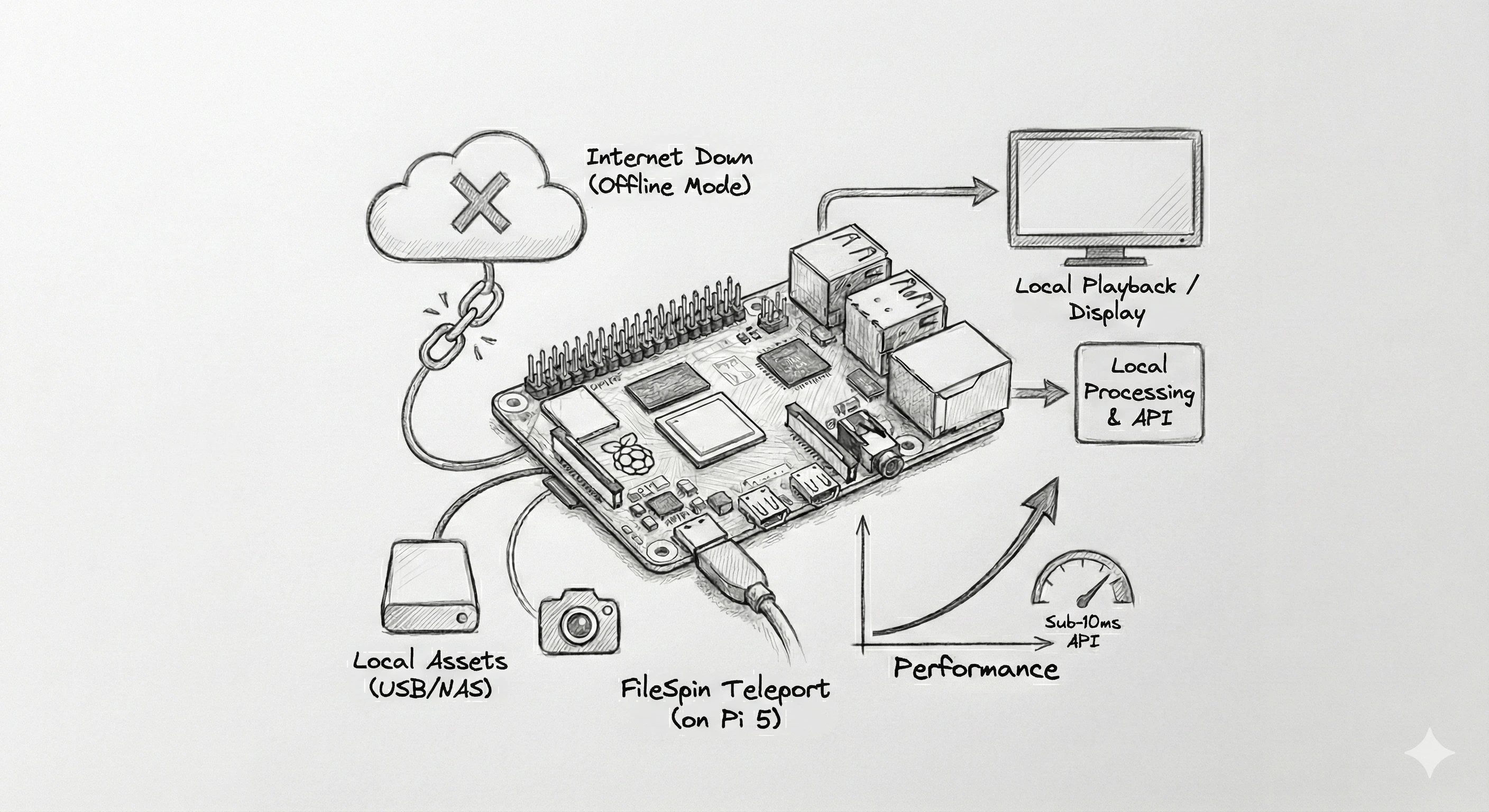
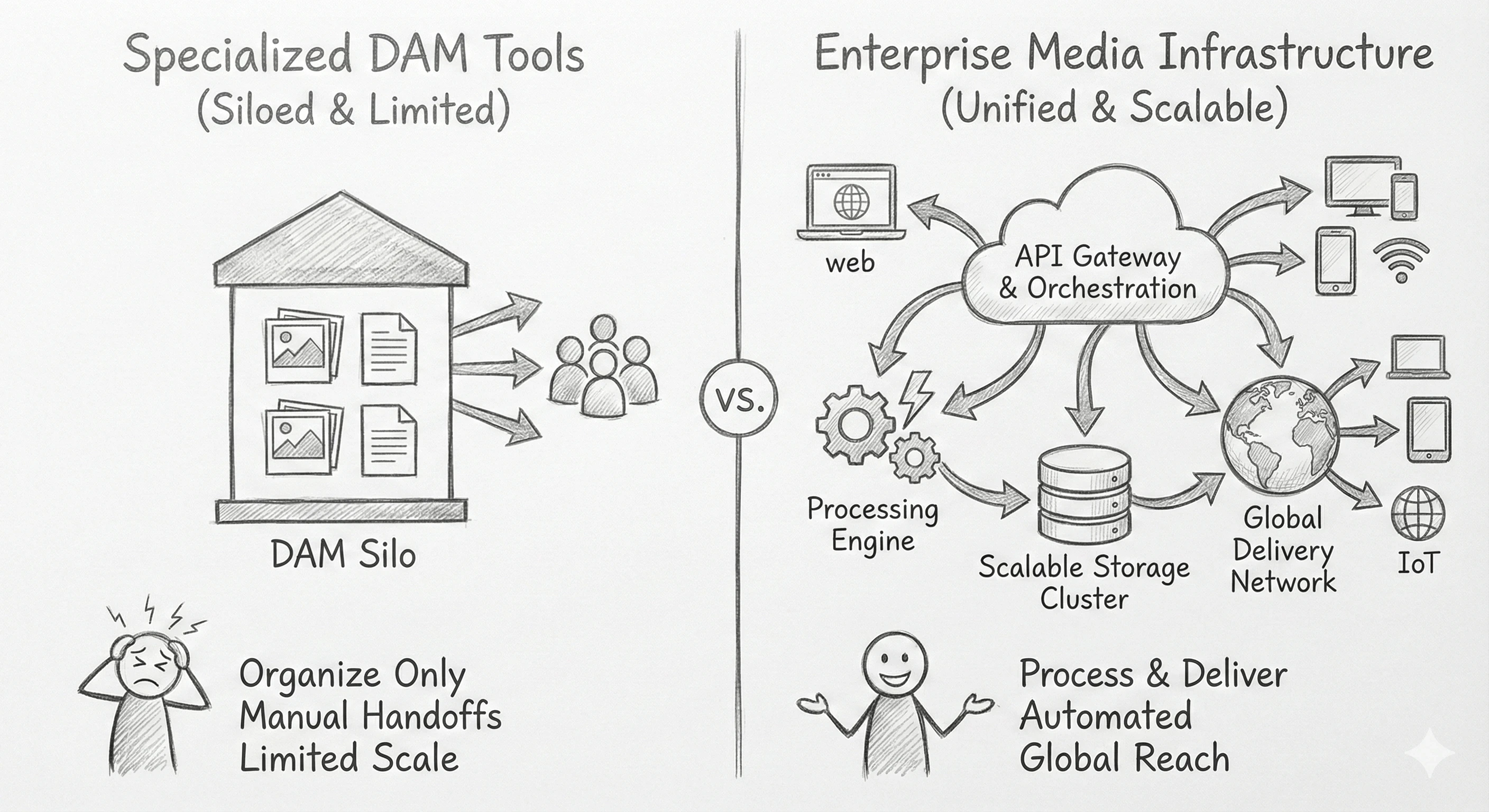
- The images in this article were produced using AI. In the first version, the faces of people wore a deliriously happy expression and the scene bland. I iterated using my taste, judgement and kept AI on-task. I am not an expert in visual medium and my taste is questionable. Even so, I hope the final images capture my idea better because of the human-involved iterations.
- I skipped the parallels between AI revolution and industrial revolution. This is a much larger subject and I cannot do justice to this in this short essay.