Compare FileSpin
FileSpin vs Canto
Canto organises digital assets and shares them through branded portals, with proofing and AI search alongside. If your team needs to prepare campaign media, get approvals and deliver across channels, consider FileSpin.
FileSpin keeps originals, preparation, review and delivery in one library, with campaign and usage insights alongside. Optional AI Agents and Scheduled Agents take on routine work within per-user budgets.
By FileSpin · Updated 15 October 2026
Should you shortlist FileSpin?
Shortlist FileSpin when:
- Your team prepares campaign or product media for many channels, and you want sizes, formats, background removal and video outputs created from the same library you manage it in.
- You want reviews, partner sharing and delivery reporting on the same assets, including which files and outputs each partner downloaded.
- You want to work from the Dashboard and APIs, with an optional AI Agent and MCP tools under per-user budgets.
Canto may fit better when:
- Branded portals for internal teams and partners are the main way your organisation finds and uses assets.
- You want one vendor package that combines the DAM with product content, proofing and template-based brand creation.
What to test before you decide:
- Take one campaign from upload to the image sizes and video outputs each channel needs.
- Share approved files with an external partner, then check what they downloaded.
- Export a sample of your Canto albums and custom fields, and plan how portal and Media Publisher links will change.
FileSpin vs Canto at a glance
Canto details are taken from Canto’s public product pages and documentation, checked 15 October 2026.
Asset organisation, metadata and search
Product images need SKU, colour and season; event media needs session and speaker. FileSpin’s assignable schemas keep both in one library, and search combines keywords, field filters, OCR and face search. Collections group campaign assets without duplicating originals.
Canto organises assets in folders and albums with custom fields, AI Visual Search and an AI Library Assistant.

Image preparation, video and delivery
Turn one product photograph into a catalogue card, a detail view and a campaign banner through URL transformations, while the original stays in your library. Background removal, ghost mannequin and saved AI edit sequences prepare images before review, and recordings become HLS streams, clips and storyboards.
Canto’s Media Publisher delivers images over a CDN, with sizes and crops set in the URL and generated from a configured master image.

Prepare product photos for your storefront
Clean up product photos with background removal, then create the sizes and formats your storefront needs from the same original.
Reviews, versions and collaboration
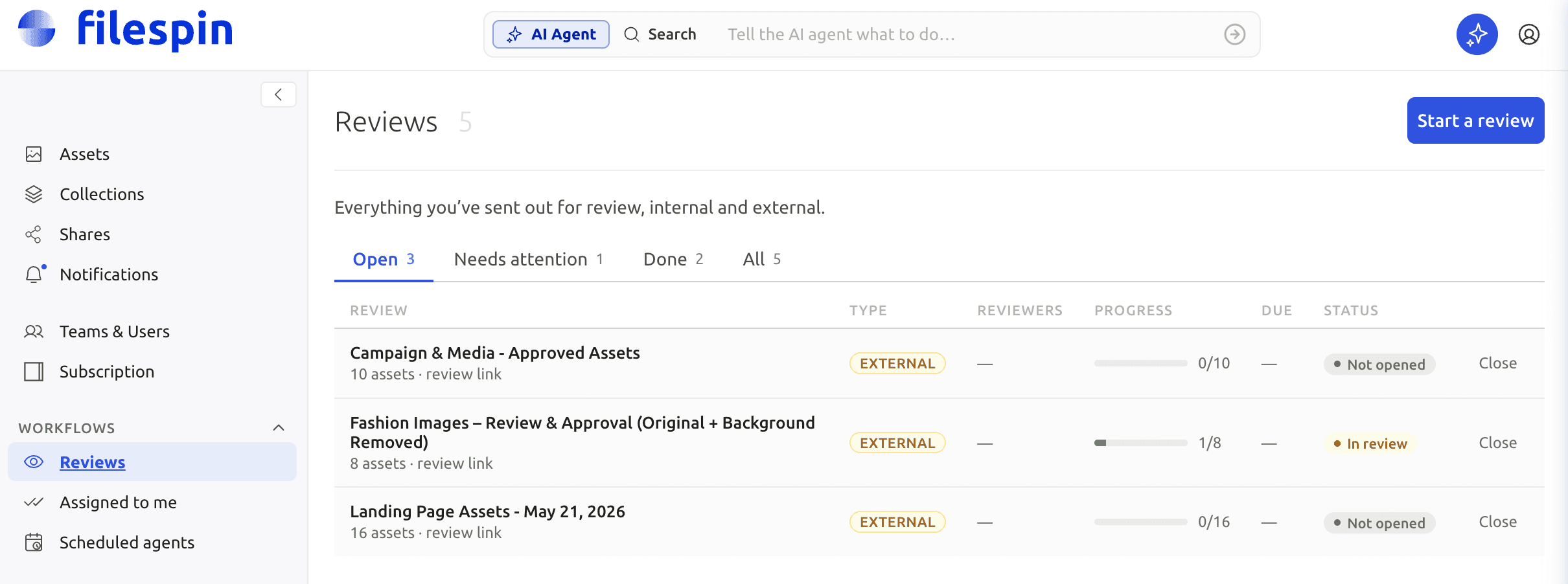
Send an image or clip for internal or external review, collect comments and approve or reject it, with due dates, task ownership and progress in one Reviews list.
Canto’s Approval Hub add-on creates proofs from library assets, with reviewers, approvers and markup across proof versions.
Control access, sharing and your originals
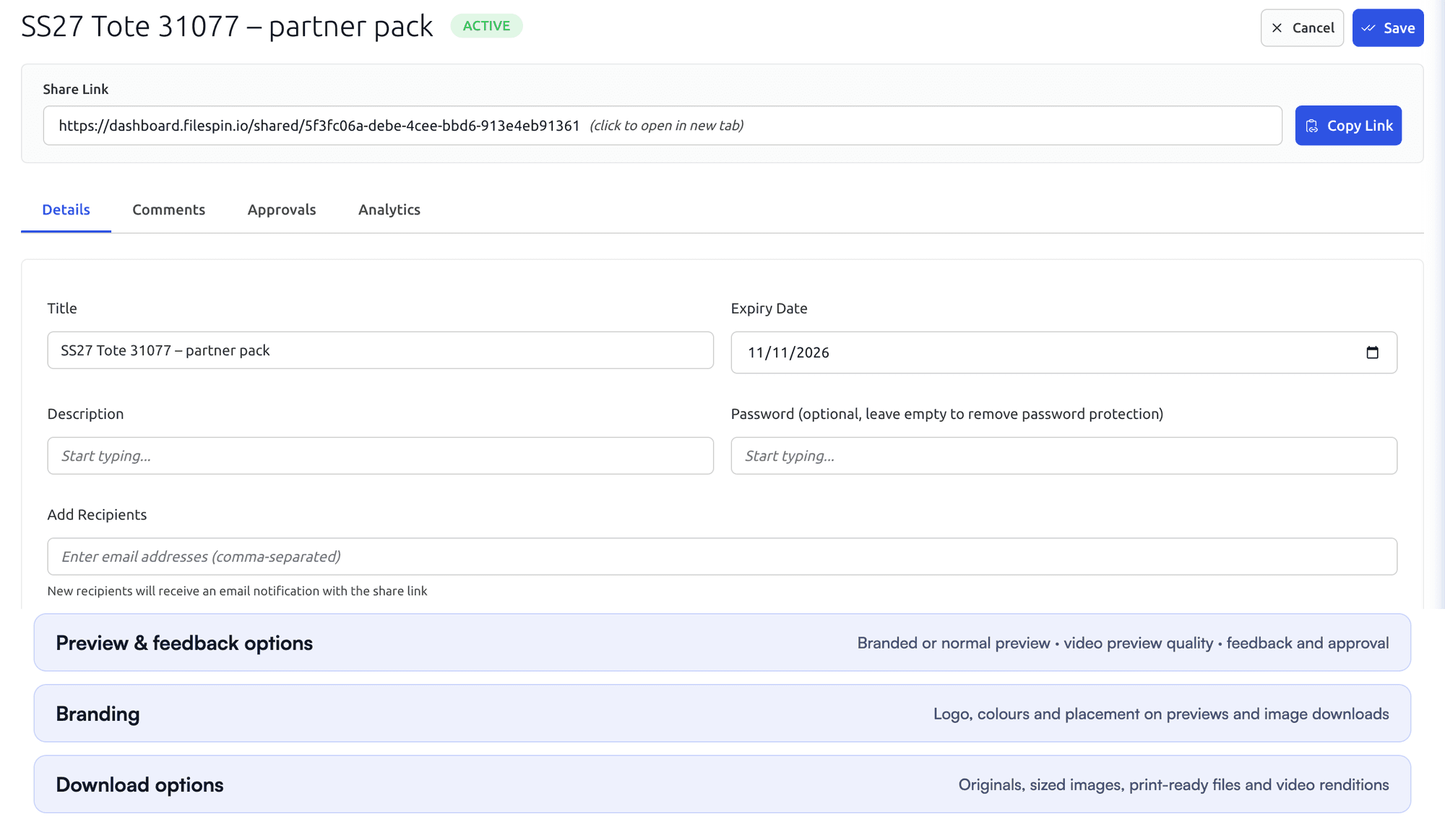
Give each share its own expiry, password, recipients and download options, then check the page partners receive. On Scale and Enterprise, FileSpin can keep originals and renditions in your own AWS S3 bucket.
Canto portals can be branded and configured to show assets with selected approval statuses and metadata fields.

Share assets with a client or colleague
Select assets, choose what the share is for and send a branded Share Page that recipients can open without logging in.
Automate recurring work and stay in control
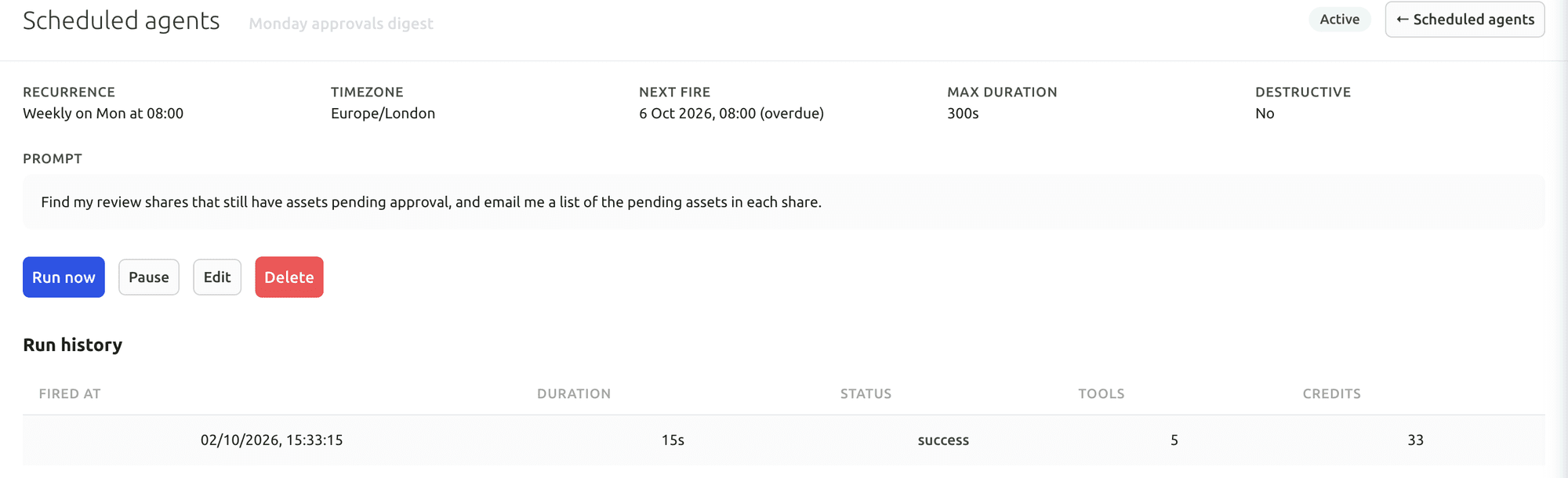
Do day-to-day work from Dashboard menus and APIs. When you want help, ask the AI Agent to find assets, update metadata, prepare images and create shares, or connect Claude or ChatGPT through the MCP Connector. Scheduled Agents run recurring work, such as tagging a collection on a schedule.
Agent activity records every operation, and per-user credit limits keep usage in check. You can undo tagging and metadata changes. APIs, webhooks and Make, Zapier and n8n integrations connect FileSpin to the tools you already use.
Canto offers AI Visual Search and an AI Library Assistant inside its platform.
Your first useful task with the Dashboard AI Agent
Give the Dashboard AI Agent a plain-language request, watch it find the assets and carry out the task, then check the result in the library.
Connect Claude or ChatGPT through the MCP Connector
Connect an AI assistant to your FileSpin account, then search assets, update metadata and create shares from the chat, under your own permissions.
Explore the AI Agent and MCP tools →
Connect campaign delivery with operational insights
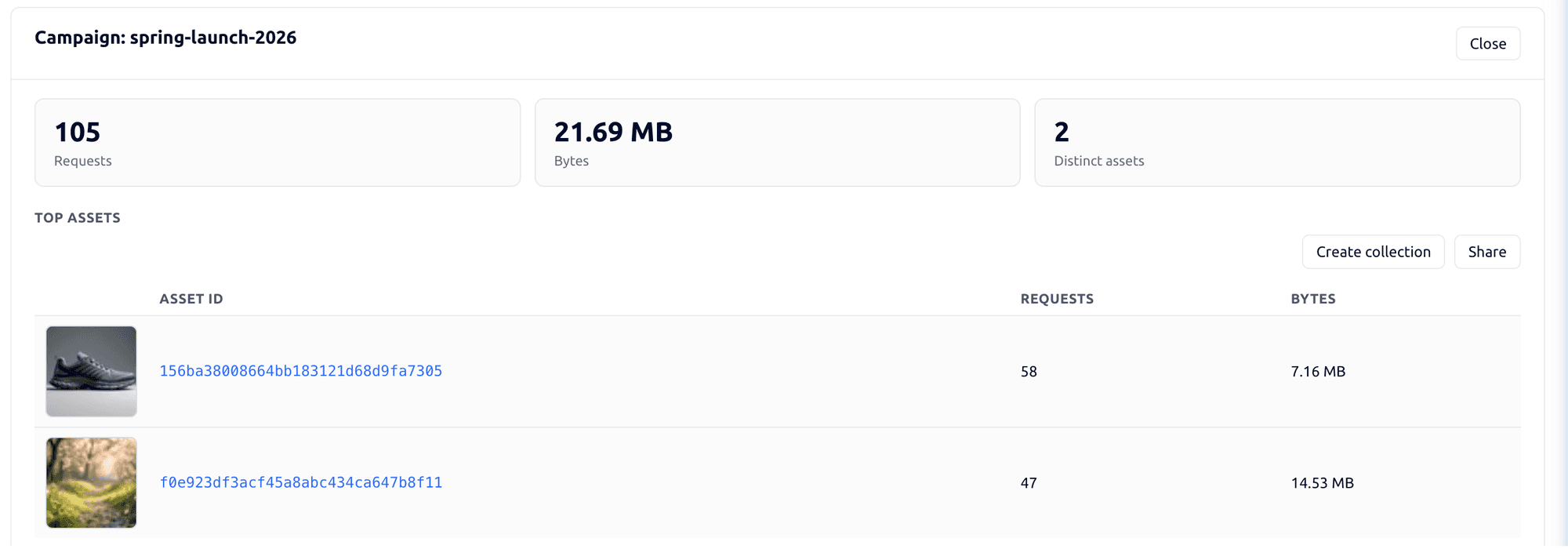
Tag campaign links by channel, placement and audience, then see the requests, bytes and assets delivered under each campaign. Share analytics shows which partner downloaded which file and output. Usage shows storage, API requests, delivery and AI credits by user and period.
Canto reports on file transfers, metadata activity, sharing and logs, and supports Google Analytics tracking.

Explore the FileSpin platform →
Pricing, add‑ons and implementation
Canto doesn’t publish prices; it quotes packages based on team size and storage needs.
FileSpin publishes its plans: Pay as you go from $5 a month, Growth and Scale with included allowances, and Enterprise by agreement. Plans cover contributors, storage, image and video processing, delivery and the AI usage you choose. Customer-owned S3 storage is on Scale and Enterprise, and Teleport on Enterprise.
Move from Canto with the right team behind you
Albums become collections, custom fields map to schemas, and tags and content IDs travel with each asset. Portal and Media Delivery Cloud links are mapped to FileSpin delivery links or Share Pages before cutover.
Inventory MDC URLs and source originals separately from generated master images, and record portal audiences and approval states. Rebuild proofing and portal behaviour once you have decided which history and access rules to keep.
Migration starts with a representative collection: originals and metadata are exported, fields and relationships mapped, and the import checked for search, review, permissions and delivery. Old-to-new asset IDs and URLs are recorded so every application reference moves cleanly, and the source stays available until you sign off.
Replace Canto portal and MDC references deliberately. Rebuild recipient access and required image transformations, then test replacements on the real storefront.
Canto OAuth access, a complete Search / Filter inventory and authorised original downloads provide the starting point. Keep content IDs, tags, custom fields and album membership together in the export manifest. Search results already contain metadata, so avoid requesting every asset’s details again without a reason. Follow pagination and back off on HTTP 429. Retrieve originals rather than MDC master-image renditions; inventory historical versions separately.